
Welcome to the first part of our three-part blog series on ESG (the E, S, and G) and communicating sustainability through content marketing.
The E in ESG covers how a business affects the natural environment through its operations, products, services and supply chain.
Relevant issues may include greenhouse gas emissions, energy, water, waste, materials, pollution, biodiversity and climate-related risks.
Communicating environmental progress requires clear evidence behind every claim. Businesses need to explain what has changed, how they measured progress, which parts of the organisation are included, and where further work is still required.
This article explains how to communicate environmental initiatives clearly, accurately, and with sufficient context so customers, investors, employees, and other stakeholders can understand the progress being made.
What is ESG?
ESG stands for environmental, social and governance. It assesses how a business manages sustainability-related impacts, risks, and responsibilities across these three areas.
The environmental pillar covers the organisation’s relationship with the natural environment. The social pillar focuses on people, including employees, customers, suppliers and communities. Governance covers leadership, accountability, ethics, oversight and decision-making.
This article focuses on the environmental pillar.
What is the E in ESG?
The E in ESG covers the environmental impacts, risks and opportunities connected with a business.
It may include:
- Greenhouse gas emissions.
- Energy use and renewable energy.
- Water consumption and water-related risks.
- Waste, recycling and circularity.
- Materials and resource use.
- Pollution prevention.
- Biodiversity and land use.
- Climate-related physical and transition risks.
- Environmental performance across the supply chain.
The most relevant issues will depend on the organisation’s industry, operations, geography and material impacts.
Environmental communication should explain the action taken, the available evidence, the scope of the claim, and the progress against a defined baseline or target.
Read more about Sustainability marketing & explaining ESG work in practice.
Environmental claims need a clear evidence trail.
Environmental content can lose credibility when the claim is broader than the evidence behind it.
A company may describe a product as sustainable without explaining which feature supports that description. A carbon reduction may be announced without identifying the baseline, timeframe or operational boundary. A partnership may receive extensive promotion even though its contribution to the organisation’s overall environmental impact is limited.
At Kyyte, we look for four elements before shaping environmental content:
- The specific claim. What exactly has changed or improved?
- The supporting evidence. Which data, records, certifications or project outcomes support the statement?
- The scope and context. Which operations, products, markets or reporting periods are covered?
- The remaining work. What has not yet been addressed, and what happens next?
This gives the communication enough substance to withstand scrutiny while remaining clear for a wider audience. These same checks apply when turning ESG data into content people understand, especially when technical figures need to be adapted for customers, employees or other wider audiences.
Clear environmental communication also benefits from consistent brand messaging. See how we developed e-Stewards’ brand guidelines, including its environmental commitments, key messages and tone of voice.
You can read more about sustainable content marketing in our recent blog:
Why is it crucial for companies to create ESG initiatives?

The answer lies in the benefits it offers to businesses and society at large.
Embracing ESG initiatives and practices not only helps companies minimise their environmental footprint but also drives innovation, reduces operational risks, enhances reputation, and fosters long-term value creation.
Additionally, customers and investors are increasingly seeking out companies that prioritise ESG principles, making it essential for businesses to integrate sustainability into their core values and communicate their efforts transparently.
Let’s explore key aspects of sustainable marketing content creation for the environment and provide actionable strategies to make a positive impact.
By adopting eco-friendly practices and integrating sustainability into your content marketing strategy, your business can not only contribute to a greener world but also attract environmentally conscious customers.
We’ll delve into conducting an environmental assessment, setting clear goals, integrating green initiatives into your content marketing strategy, leveraging storytelling, and forging green partnerships and collaborations to build a more sustainable future.
Environmental assessment and goal setting.
To embark on a successful, sustainable content marketing journey, start by conducting a comprehensive environmental assessment of your business. This assessment evaluates various aspects of your operations that affect the environment.
Identify your carbon footprint, energy usage, waste generation, and water consumption. Use this data to set clear and measurable environmental goals aligned with your business values.
By understanding your company’s environmental impact, you can identify areas for improvement and set specific targets to reduce your ecological footprint.
For instance, calculating your Scope 1, 2, and 3 emissions will provide insights into direct and indirect greenhouse gas emissions associated with your operations and supply chain.
Consider using eco-friendly alternatives for your office supplies, reducing single-use plastics, and optimising energy consumption to achieve substantial reductions in your carbon emissions.
Goal setting is a crucial part of your ESG journey. Set ambitious but achievable targets to reduce your environmental impact. For instance, aim to achieve carbon neutrality by the end of the year or increase the percentage of recycled materials used in your products.
These ESG goals will serve as guiding principles in shaping your content marketing strategy and showcasing your commitment to sustainability to your audience.
Kyyte’s environmental assessment and goal setting.

Sustainability takes creative flight at Kyyte. Our commitment to building a sustainable marketing agency starts with the steps we’re taking to minimise our environmental impact.
Kyyte has joined the UN Global Compact Network Singapore and has begun tracking our ESG goals and progress using some of the tools they provide.
CERT is a tool designed to simplify the recording and management of emissions data and enable companies to mitigate their climate impact while reducing operational costs and risks.
Once our baseline is known, we can identify ways to reduce our emissions. By setting targets, we can hold ourselves accountable and continuously strive for greater sustainability in our operations.
Build environmental content around real business activity.
Environmental content should begin with the work the organisation is actually doing.
That may include emissions reduction, energy efficiency, water management, waste reduction, material choices, biodiversity programmes or changes across the supply chain.
The role of content is to explain that progress clearly.
An editorial calendar can help organise updates across the year, but each piece should be tied to a specific initiative, target, milestone or reporting period. That gives the audience something concrete to understand and reduces the risk of filling the calendar with generic sustainability themes.
Useful environmental content may include:
- Project updates that explain what changed and why.
- Case studies showing how an initiative was implemented.
- Progress reports against published targets.
- Leadership commentary on environmental priorities.
- Employee or supplier stories connected to wider operational change.
- Practical explainers that help customers understand the environmental impact of a product, service or process.
Educational content can still play a useful role when it is relevant to the organisation’s expertise and audience.
For example, a property company might explain energy-efficiency improvements across its buildings. A manufacturer might show how material or waste decisions affect production. A financial institution might explain how climate risk is considered in lending or investment decisions.
The strongest environmental content stays close to the business, uses evidence and gives readers enough context to understand the scale of the progress being reported.
How Kyyte has incorporated green initiatives into our content strategy.

At Kyyte, ESG and sustainability are woven into our brand content marketing strategy.
Follow us on LinkedIn to see how we share our eco-friendly practices and updates on our sustainability journey. Our content marketing calendar prioritises green initiatives, and we have a dedicated webpage showcasing our sustainability commitment to a greener future.
Let’s not forget one of our core values – sustainability!
We’re passionate about helping governments, businesses, and communities build a sustainable world where ESG goals become a reality. That’s why we’re taking the lead by minimising the environmental impact of all our business operations, promoting sustainable practices, and telling our clients’ sustainability stories.
Use storytelling to explain environmental progress.
Environmental stories are most useful when they help people understand what changed, why the work was needed and how the organisation contributed.
A strong story may follow a project from the original problem through to implementation and results. It may explain how a new process reduced waste, how a supplier change affected material use or how a site improved energy performance.
The people involved can add valuable context. Employees, technical teams, suppliers, customers and community partners may help explain how the initiative worked in practice and what was learned along the way.
Environmental storytelling should remain connected to evidence. Include the target, baseline, timeframe or result where available, and avoid presenting one project as proof of wider progress unless the evidence supports that conclusion.
Customer stories and testimonials can also be useful when they describe a specific experience or outcome. Their role is to add perspective, rather than validate environmental claims that require measurable evidence.
The strongest stories give readers a clear view of the work, the people behind it and the scale of the progress achieved.
How Kyyte communicates environmental impact.

If you’re still reading, you’ve experienced our storytelling about environmental impact firsthand in this blog. We believe in the power of stories, and recently shared more about our sustainability efforts in the blog titled “Launching a Content Marketing Agency in Singapore.”
Through compelling narratives, we highlight our commitment to ESG and sustainability. Stay tuned for more inspiring stories as we continue our mission to drive positive changes in sustainability.
Explain the role of environmental partnerships.
Partnerships can help businesses access specialist knowledge, improve implementation and address environmental issues that require cooperation across organisations.
The communication should explain the purpose of the partnership and the role each party plays.
A partnership with an environmental organisation might support conservation, research, education or community programmes. A supplier relationship might improve materials, emissions, waste management or traceability across the value chain.
Before promoting a partnership, establish:
- The shared objective. What environmental issue is the partnership addressing?
- The contribution of each organisation. What expertise, funding, resources or operational support does each party provide?
- The evidence of progress. Which activities, milestones or outcomes can be reported?
- The relationship to the wider business. How does the partnership connect with the organisation’s material environmental impacts and priorities?
Avoid using a partner’s reputation as a substitute for evidence. A logo, campaign or joint announcement says little about environmental performance without a clear explanation of the work and its results.
Where supplier partnerships are involved, explain the standards, selection criteria, and monitoring processes associated with them. This helps stakeholders understand how environmental expectations are being applied across the supply chain.
Kyyte’s green partnerships and collaborations.
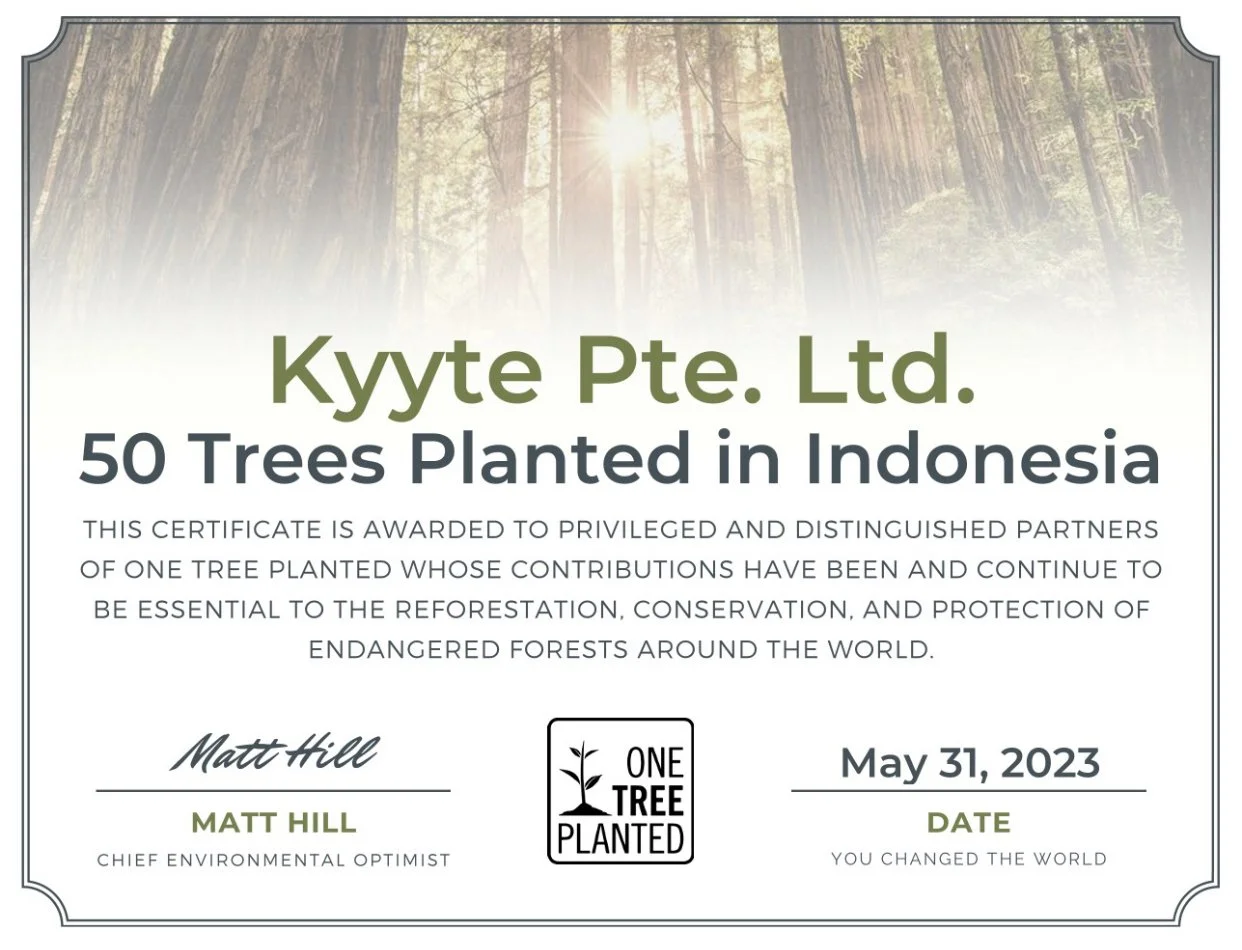
Despite being a newly formed business, Kyyte is already making an impact through green partnerships and collaborations.
During our launch event, we partnered with One Tree Planted and committed to planting a tree for every attendee.
We chose to plant these trees in Indonesia, the closest location to our content marketing agency in Singapore.
This is just the beginning of our journey to forge additional partnerships. As we align with like-minded organisations, we will, of course, share these meaningful collaborations on our content marketing calendar.
Our final thoughts on the E in ESG.
Communicating the E in ESG begins with the environmental work itself.
Clear goals, reliable data, defined responsibilities and evidence of progress give businesses something credible to explain. Content can then help customers, employees, investors and other stakeholders understand the initiative, its relevance and the results achieved.
The strongest environmental communication is specific about what has changed, the scope of the claim and the work still ahead. It connects individual projects with the organisation’s wider environmental priorities without making the progress sound larger than the evidence supports.
Sustainability and climate reports provide an important foundation, but the useful content does not need to remain within the report; it should be repurposed. Data, project milestones, leadership perspectives, employee experiences and supplier initiatives can support website content, case studies, stakeholder updates and ongoing campaigns throughout the year.
Kyyte helps organisations identify those opportunities and turn environmental information into clear, evidence-based content for wider audiences.
Need an ESG and sustainability copywriter? Take a look at our sustainability copywriting services.
Other ESG frequently asked questions:
What does the E in ESG mean?
The E in ESG refers to how a business affects and depends on the natural environment. It can include emissions, energy, water, waste, pollution, materials, biodiversity and climate-related risks.
How can businesses communicate environmental progress clearly?
Explain the initiative, the baseline, the action taken and the measured result. State which operations or products are included and avoid making the claim broader than the available evidence.
What evidence should support environmental claims?
Useful evidence may include emissions data, energy records, waste and water measurements, audited reports, certifications, project results and progress against published targets. The evidence should be relevant to the exact claim being made.
How can companies avoid greenwashing?
Use specific language, explain the basis of each claim and include important limitations or context. Avoid vague descriptions such as green, eco-friendly, or sustainable unless the business can clearly show what those terms mean in practice.
What content can communicate the E in ESG?
Relevant formats may include sustainability reports, environmental case studies, climate disclosures, website content, leadership messages, project updates, infographics, employee communications, and supply chain stories.
Coming soon: The S is ESG – Social.
Ensure you read Part 2 of our blog series, where we explore the S in ESG, Social, and delve into how social responsibility intertwines with your ESG communications and content marketing plans.
Together, let’s pave the way for a greener, more sustainable future through purposeful and impactful sustainability and ESG content marketing strategies.
Do you need help telling your ESG and sustainability story?
Kyyte’s ESG and sustainability marketing services help organisations communicate environmental initiatives with the context, evidence and accuracy stakeholders expect.