Written by Luke Joyce | Originally published 4 November 2024 | Updated September 2026
Singapore lacks vast stretches of spare land for solar farms. At Tengeh Reservoir, that constraint has produced one of the country’s most visible renewable energy projects: 122,000 solar panels floating across approximately one-third of the reservoir.
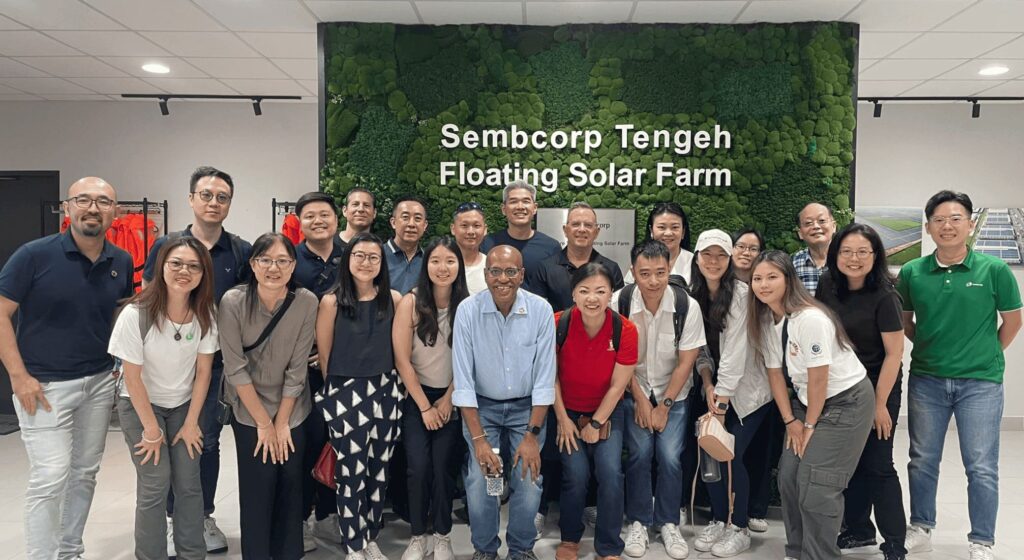
In 2024, I visited the Sembcorp Tengeh Floating Solar Farm (1) through a sustainability summit organised by UN Global Compact Network Singapore (GCNS) (2). Seeing the installation from the water gave the figures a physical scale I hadn’t imagined beforehand. It also showed how much engineering, environmental planning, and ongoing monitoring go into a short phrase like “floating solar”.
Kyyte is a GCNS member company, and the visit was part of my ongoing sustainability learning. It was also a chance to see how a complex project can be explained clearly: start with what people can see, then show them the engineering, monitoring and environmental safeguards that make it work.
Tengeh Floating Solar Farm at a glance.
| Official name: | Sembcorp Tengeh Floating Solar Farm. |
| Location: | Tengeh Reservoir, Singapore. |
| Opened: | July 2021. |
| Gross solar capacity: | 60 megawatt-peak (MWp). |
| Scale: | More than 122,000 solar panels across 45 hectares, arranged over 10 floating solar panel islands. |
| Reservoir coverage: | Approximately one-third of the surface. |
| Electricity: | The renewable energy goes towards powering PUB’s water system. Its scale is equivalent to the annual electricity needs of about 16,000 four-room HDB flats. |
| Estimated emissions reduction: | About 32 kilotonnes of carbon emissions each year, which Sembcorp compares with taking 7,000 cars off Singapore’s roads. |
Why Singapore built a floating solar farm.
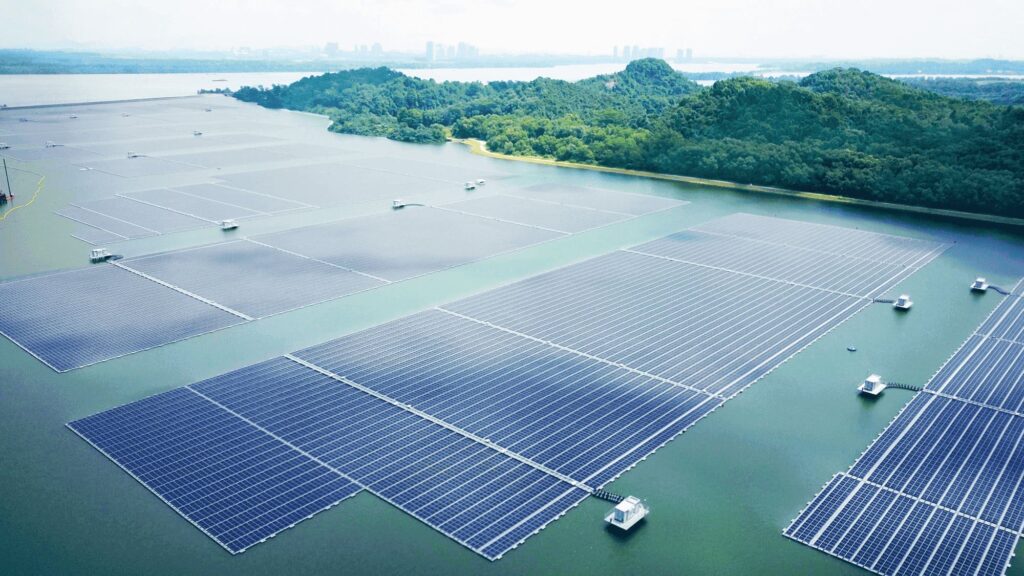
Singapore’s solar landscape includes rooftop installations, ground-mounted systems and floating photovoltaic projects. Tengeh is a floating solar farm. Its panels sit on water rather than occupying land that may be needed for housing, industry, transport or other infrastructure.
The project followed years of testing. In 2016, PUB and the Economic Development Board launched a 1 MWp floating solar testbed at Tengeh Reservoir. The project assessed ten types of floating structures and photovoltaic modules. According to PUB, the testbed systems performed 5% to 15% better than a typical rooftop solar PV system in Singapore, mainly because of the reservoir’s cooler environment and the absence of shade from nearby buildings.
PUB subsequently carried out engineering and environmental studies before proceeding with the 60 MWp system. Sembcorp Floating Solar Singapore was awarded the project in February 2020, construction began that August and the farm officially opened in July 2021. At the time of commissioning, it was one of the world’s largest inland floating solar photovoltaic systems.
Tengeh also sits within Singapore’s wider energy plans. The Singapore Green Plan 2030 (3) targets at least 2 GWp of solar deployment by 2030. That would meet around 3% of projected electricity demand and generate the equivalent of the annual electricity needs of approximately 350,000 households.
How does the Tengeh Floating Solar Farm work?
The basic electricity-generation process is the same as other solar photovoltaic systems. Sunlight reaches the photovoltaic cells inside the panels, which convert solar energy into direct current electricity. Inverters then convert that direct current into alternating current so the electricity can be used within the wider power system.
Water changes the operating environment. The reservoir helps keep module temperatures lower than they would be on a hotter land or rooftop surface. Solar panels generally operate more efficiently at lower temperatures. Their position on open water also reduces shading from surrounding structures.
At Tengeh, the renewable electricity goes towards powering PUB’s water system. The comparison with 16,000 four-room HDB flats communicates the amount of electricity generated here. It doesn’t mean the panels directly supply those homes. That distinction is small, but it keeps the claim accurate.
The technology behind monitoring and maintenance.
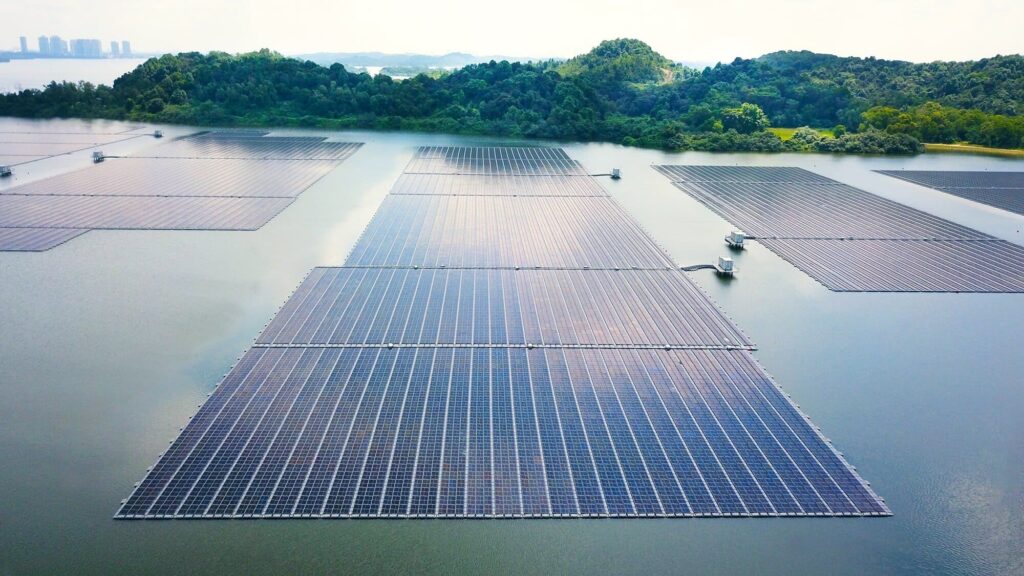
A solar farm of this size needs more than panels and inverters. During the visit, we learned how Sembcorp uses a digital monitoring platform for real-time fault detection and performance monitoring across the installation.
Drones support regular operations and maintenance checks, allowing faster inspection of large areas. We were told that this reduces manual inspection costs by about 30%. The farm has also used advanced drone electroluminescence imaging on a scale described during the visit as a world first. This technology helps teams identify defects within solar modules without interrupting normal operations.
Some of the useful innovations are more practical. Sembcorp developed custom tools, including solar panel assembly jigs, to support construction and installation. Details like these make the project easier to understand. They show where engineering decisions improved speed, consistency or maintenance rather than relying on a broad claim about innovation.
How is the water quality and biodiversity protected?
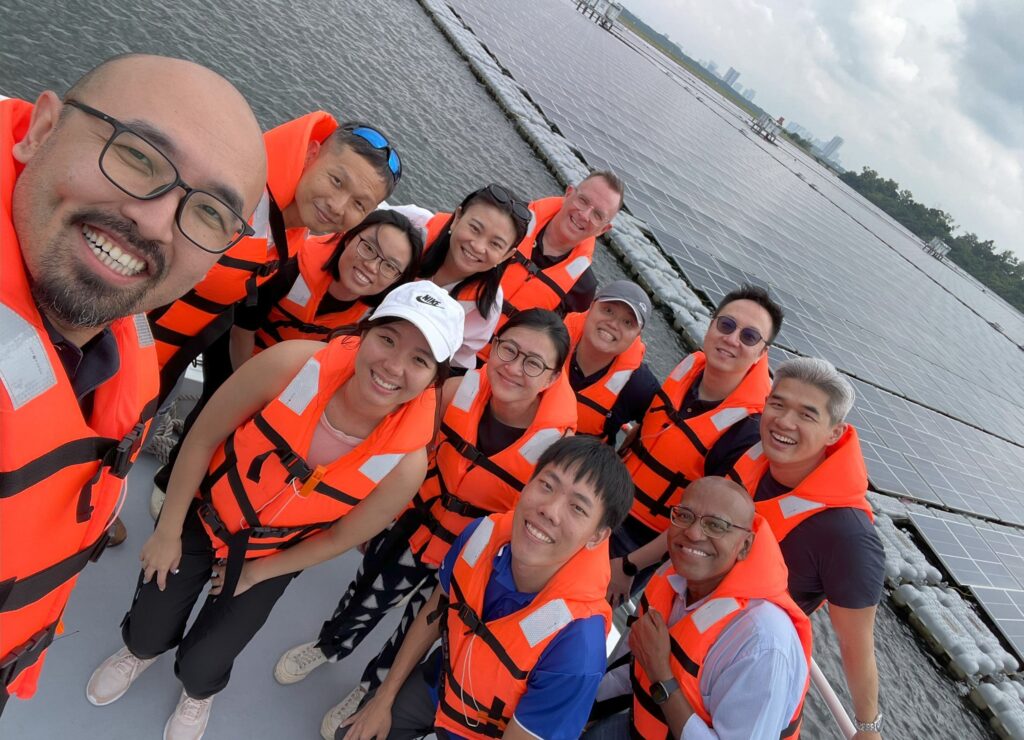
Putting a large solar installation on a reservoir raises reasonable questions about water quality, aquatic life and wildlife. Those questions were considered before construction and remain part of the farm’s operation.
PUB carried out comprehensive engineering and environmental studies before approving the large-scale project. PUB and Sembcorp then established an Environmental Management and Mitigation Plan covering biodiversity, water quality, sediment quality and noise before, during and after construction. PUB’s published information about Singapore’s floating solar systems (4) explains the main safeguards.
The floats are made from UV-resistant, food-grade high-density polyethene. Gaps between the panels allow sunlight and airflow to reach the water, while aerators help maintain dissolved oxygen levels. Anti-reflective coatings reduce glare. Two-thirds of the reservoir surface remains uncovered so wildlife can continue to forage and hunt.
PUB monitors water quality daily through online sensors, supported by regular sampling and testing. PUB reports that its earlier Tengeh testbed showed no observable change in water quality and no significant impact on wildlife. Studies of the larger system found that appropriate planning and design could keep effects on water quality, flora, and fauna minimal.
Otters were one of the most memorable parts of the visit. Although we didn’t see any on the day, we were told that around seven otters lived in and around Tengeh Reservoir before construction began in 2020, and that up to 14 had since been spotted at one time. Presenting that as something shared during the visit keeps the observation in its proper context. It should not be treated as a substitute for the project’s formal biodiversity monitoring.
Where Tengeh fits into Singapore’s wider solar landscape.
Tengeh attracts attention because of its scale, though it is one part of Singapore’s solar deployment. PUB also operates smaller 1.5 MWp floating solar systems at Bedok Reservoir and Lower Seletar Reservoir. Together, those two installations can generate the equivalent of the annual electricity used by about 800 four-room HDB flats and reduce carbon emissions by around 1.5 kilotonnes each year.
Floating solar will not replace rooftop or ground-mounted systems. Each format uses different space and brings its own engineering and environmental considerations. Tengeh shows why reservoirs can form part of the mix in a country where land constraints shape almost every large infrastructure decision.
What the visit taught me about sustainability communication.

The project has an impressive headline: 122,000 panels floating on a reservoir. The more convincing story sits underneath it. Years of testing came first. Environmental studies affected the design. Water is monitored every day. Two-thirds of the reservoir was left uncovered, and digital tools help the team maintain an installation spread across 45 hectares.
Those details gave us something concrete to assess. They also prevent the communications from drifting into generic language about clean energy and a greener future. The project can be explained through the decisions made, the evidence available, and the safeguards still operating.
This is also relevant to Kyyte’s work in sustainability marketing and ESG communications. Clear content helps readers understand what an organisation has done, how a project works and the evidence behind it. Site visits, approved project information and conversations with the people involved can turn technical material into a story that is accurate, useful and easier to remember.
A closer view produces a better sustainability story.
Visiting Tengeh changed how I understood the project. The published figures established its scale. The visit revealed how their team monitor the panels, inspects faults, manages the reservoir environment, and keeps the system running day after day.
For businesses, strong sustainability content comes from the operational detail: the decision that changed, the people responsible, the evidence being tracked and any limits that still need to be acknowledged. Those specifics add substance and keep the claims grounded.
Kyyte’s ESG and sustainability communication services help organisations turn that material into website copy, articles, case studies, leadership content and stakeholder communications. We preserve the approved facts and technical meaning, then shape the story for the people who need to understand it.
Thank you to Sembcorp Industries and UN Global Compact Network Singapore for the opportunity to visit the farm and continue my sustainability learning.
Tengeh Floating Solar Farm FAQs.
The farm is located on Tengeh Reservoir in western Singapore. It is Singapore’s first inland floating solar farm.
The Sembcorp Tengeh Floating Solar Farm has more than 122,000 panels spread across 45 hectares and 10 floating solar panel islands.
The farm has a gross solar capacity of 60 MWp. Its output goes towards powering PUB’s water system and is equivalent to the annual electricity needs of about 16,000 four-room HDB flats.
PUB reports that its earlier testbed produced no observable change in water quality. The large-scale farm is covered by an Environmental Management and Mitigation Plan, with online sensors monitoring water quality daily and regular sampling and testing.
Yes. PUB also has smaller floating solar systems at Bedok Reservoir and Lower Seletar Reservoir. Tengeh remains the largest of PUB’s operating reservoir-based solar systems described on its current floating solar page.
Kyyte is a copywriting and content marketing agency in Singapore and a member of UN Global Compact Network Singapore. Kyyte’s involvement with the solar farm was limited to Luke Joyce attending a sustainability excursion organised by GCNS. This article shares what he experienced and learned during the visit, while also reflecting Kyyte’s work in sustainability communications, including blog articles, case studies, website content and stakeholder communications.
Sources.
- Sembcorp Tengeh Floating Solar Farm
- UN Global Compact Network Singapore
- Singapore Green Plan 2030
- PUB’s published information about Singapore’s floating solar systems