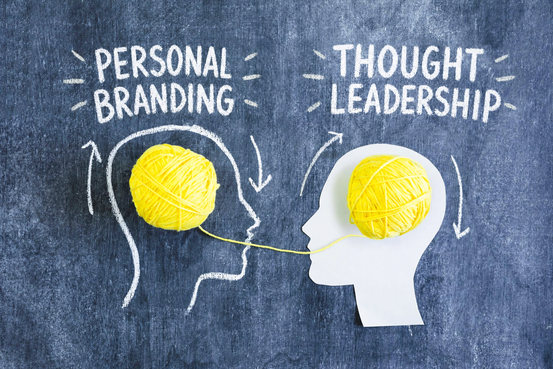
Personal branding and thought leadership are often mentioned together. Many businesses even use the terms interchangeably.
While they overlap, they serve different purposes.
Understanding the distinction helps businesses decide where to invest their time, budget and content. It also leads to better marketing decisions because each approach supports growth in different ways.
The strongest brands rarely choose one over the other. They understand how both contribute to building trust.
What is personal branding?
Personal branding is the process by which an individual becomes recognised for their expertise, personality and perspective.
For founders, executives and subject matter experts, it answers questions such as:
- Who are you?
- What do you stand for?
- Why should people listen to you?
Personal branding is built over time through consistent communication.
It may include:
- LinkedIn posts.
- Interviews.
- Speaking engagements.
- Podcasts.
- Media coverage.
- Newsletters.
- Comments on industry topics.
The goal is familiarity. People begin recognising the individual behind the business.
Our guide to building a personal brand as a founder or business leader explains how to define your positioning, choose useful content themes and create a realistic publishing process.
Businesses looking for professional support can also explore Kyyte’s personal branding services.
What is thought leadership?
Thought leadership focuses less on the individual and more on the ideas they contribute.
Rather than asking people to notice who you are, thought leadership encourages them to think differently because of something you’ve shared.
Strong thought leadership usually includes:
- Original insights.
- Practical experience.
- Informed opinions.
- Lessons learned.
- Analysis of industry trends.
It should help the audience understand the topic better than before.
Businesses often invest in thought leadership content marketing services and publish articles, research, white papers and executive commentary.
Where personal branding and thought leadership overlap.
The two approaches work best together.
- Thought leadership gives people a reason to trust your expertise.
- Personal branding helps them remember who shared those ideas.
Without thought leadership, personal branding can become superficial.
Without personal branding, valuable expertise may never gain enough visibility to influence decision-makers.
One strengthens credibility.
The other strengthens recognition.
Which comes first?

There isn’t a universal answer.
A founder launching a new business may begin by sharing practical experiences on LinkedIn before publishing longer articles.
An established executive may already have industry recognition and choose to invest in deeper thought leadership content.
The important point is consistency.
Publishing one article every six months rarely establishes authority. Neither does posting daily on LinkedIn without offering useful insights.
Both approaches require regular, valuable communication.
How content marketing supports both.
Content marketing connects personal branding and thought leadership.
A single idea can become:
- A detailed article.
- Several LinkedIn posts.
- An email newsletter.
- Presentation material.
- Speaking notes.
- Supporting website content.
This allows businesses to build authority across multiple channels while keeping a consistent message.
Many organisations work with specialist thought leadership copywriting partners to turn interviews and expertise into articles that busy audiences can consume more easily.
LinkedIn plays an important role.

For many professionals, LinkedIn has become the bridge between personal branding and thought leadership.
It provides a place to:
- Share perspectives.
- Start conversations.
- Introduce longer articles.
- Demonstrate expertise consistently.
The platform works best when posts lead people towards deeper content rather than existing on their own.
Many businesses therefore invest in LinkedIn copywriting alongside broader content marketing.
Which should your business invest in?
The answer is usually both.
Personal branding helps people recognise the individual behind the business.
Thought leadership demonstrates why that individual deserves attention.
Together, they create greater credibility, greater visibility, and more opportunities to build trust before a sales conversation even begins.
For many founders and executives, developing both at the same time produces the strongest long-term results.
This is also where thought leadership can support sales by helping potential buyers understand the business’s expertise before they make contact.
FAQs: Personal branding and thought leadership.
Is personal branding the same as thought leadership?
No. Personal branding focuses on building recognition for an individual, while thought leadership focuses on sharing expertise, ideas and insights.
Can you have personal branding without thought leadership?
Yes, but it is often less persuasive. Visibility alone does not demonstrate expertise.
Can thought leadership exist without personal branding?
Yes. Businesses can publish thought leadership under a company name, although individual experts often help the content reach a wider audience and gain credibility.
Is LinkedIn important for personal branding?
LinkedIn is one of the most effective platforms for professionals because it combines networking, publishing and industry conversations in one place.
Should a business focus on personal branding or thought leadership?
The right priority depends on the goal. Personal branding is useful when an individual needs greater visibility and recognition. Thought leadership is more useful when the aim is to demonstrate expertise through original ideas, experience and analysis. Many founders and executives build both over time because they support different parts of the same reputation.
Build stronger personal branding and thought leadership.
Kyyte provides content marketing services and copywriting services for businesses that need clear priorities, stronger website copy, useful articles, founder content, case studies and sales materials.
Reach out to discuss how clearer personal branding and thought leadership content could support your business.
Related services:
Further reading.
LinkedIn’s guide to creating impactful thought leadership content explains how businesses can plan, create and distribute useful thought leadership while strengthening the visibility of individual leaders.